Where does Vietnam’s logistics industry stand on the global map?
While China is aiming to shorten domestic delivery time to just one day, Vietnam still records domestic delivery times ranging from 5 to 7 days.
Logistics is considered the “lifeline” of the economy, playing a crucial role in connecting and driving socio-economic development.
In this article, we examine the current state of Vietnam’s logistics industry and its future prospects in the coming years.
Current status of Vietnam’s logistics industry
Vietnam has a long geographical stretch from North to South and an extensive coastline with several deep-water ports suitable for rail and maritime transport, alongside dominant road and air transport.
Regarding rail freight transport, the national railway network has a total length of 3,143 km with 277 stations, including 2,703 km of main lines and 612 km of station and branch lines. The railway system runs through 34 provinces and cities, covering 4 out of 6 economic regions.
However, operational efficiency on most main railway lines is only about 17–25 train pairs per day, with an average freight train speed of 60 km/h. Most railways were built long ago with low technical standards, limiting load capacity and reducing competitiveness compared to other transport modes.
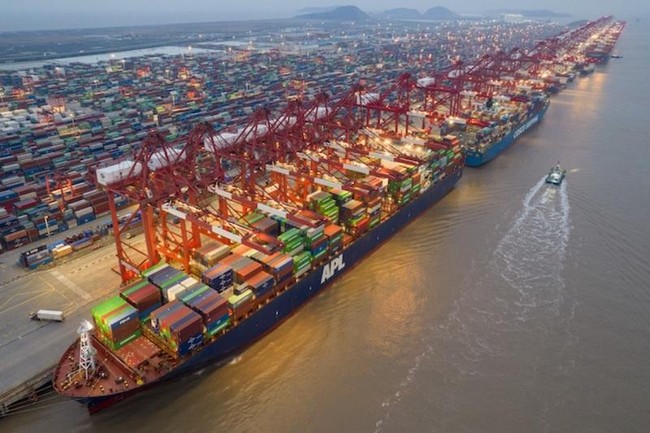
For inland waterway and maritime transport, although globally this mode accounts for about 80% of cargo volume, in Vietnam it represents less than 20% of transported goods.
According to the Vietnam Shipowners’ Association, the Vietnamese-flagged fleet currently consists of 1,563 vessels with a total capacity of approximately 12.7 million DWT. Specialized vessels dominate with 1,043 ships totaling 11.3 million DWT. However, nearly 800 vessels (77%) are small and medium-sized (5,000–10,000 GT). Only 13 vessels exceed 30,000 GT, with an average age of 16.8 years.
Compared to global standards, Vietnam’s container fleet remains very small and saw almost no growth during 2016–2020. Currently, there are only 10 container shipping companies operating 48 container vessels with a total capacity of 39,519 TEUs and total deadweight of 548,236 DWT.
Vietnam’s fleet mainly operates on inland waterways and short routes to China and Southeast Asia. The market share for transporting export goods to Europe and the Americas is dominated by foreign enterprises with larger capacity. The share of import cargo transport handled by Vietnamese fleets has declined from 11% in 2015 to 7% in 2018 and 5% in 2020.
For road transport, although logistics costs are significantly higher than maritime and rail transport (transporting a 40-foot container from Hanoi to Ho Chi Minh City costs about VND 40 million, 9.7 times higher than sea transport and more than 2.5 times higher than rail), most businesses still prefer this mode due to its flexibility, direct connectivity to ports, airports, and terminals, and time control advantages.
Road transport remains dominant, accounting for over 70% of total freight volume.
For air cargo transport, according to the Civil Aviation Authority of Vietnam, nearly 70 international airlines and 4 domestic carriers operate passenger and cargo services, including 29 cargo-dedicated airlines. International carriers account for 80% of total air cargo volume in Vietnam.
Vietnam does have cargo services such as Vietnam Airlines Cargo and Vietjet Air Cargo, but they do not operate dedicated freighter aircraft, instead combining passenger and cargo transport. At the end of 2022, IPP Air Cargo submitted an application for an air operator license but later withdrew due to global economic uncertainties.
Recently, a new entrant, Vietravel Airlines Cargo, joined the market, planning to operate 2–4 dedicated freighter aircraft (Boeing 737-800F) in its first year for domestic and Asian routes, doubling the fleet in the following year.
Currently, Vietnam has over 40,000 logistics enterprises, covering transportation, warehousing, customs clearance, and freight forwarding. Among them, more than 5,000 operate in international logistics, with 89% being small and medium-sized Vietnamese enterprises, 10% joint ventures, and only 1 fully foreign-owned enterprise.
Limitations of Vietnam’s logistics industry
Despite the large number of companies, Vietnamese logistics enterprises only capture about 30% of market share, while the majority belongs to foreign companies.
Logistics costs in Vietnam remain relatively high (about 16.8% of GDP in 2022, compared to the global average of 11%). Customs procedures and specialized inspections remain complex and overlapping, prolonging clearance times. Connectivity among logistics enterprises is weak, and the industry lacks strong domestic leadership.
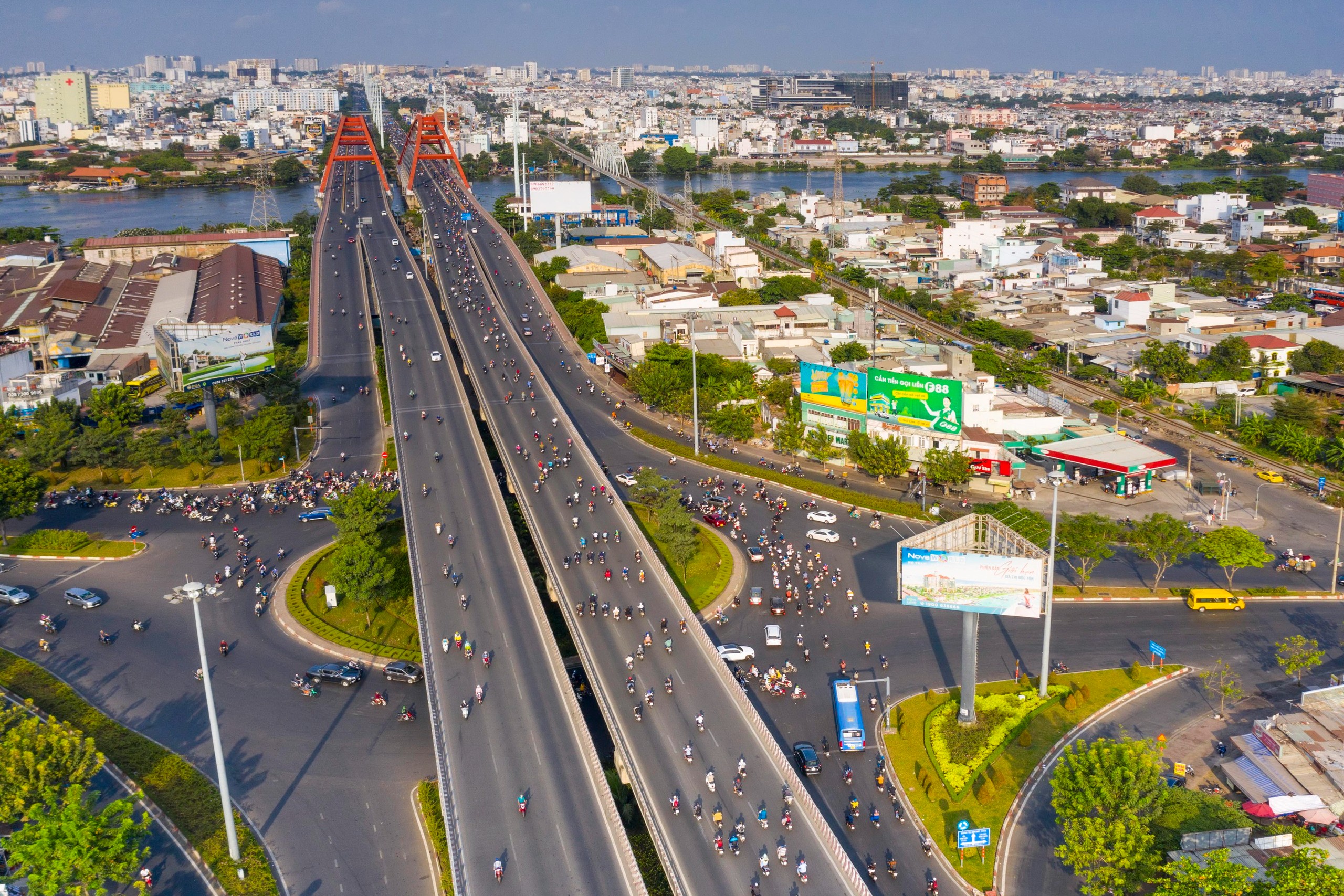
Infrastructure remains inconsistent. For example, Cat Lai Port – the largest international container port in Vietnam – has long faced traffic congestion due to inadequate transport infrastructure, significantly reducing operational efficiency.

According to Mr. Tran Thanh Hai, Deputy Director General of the Agency of Foreign Trade (Ministry of Industry and Trade), transport infrastructure is not synchronized, and connectivity between maritime, rail, and road transport remains limited. The lack of national and international logistics centers in key economic zones also contributes to high logistics costs. Meanwhile, foreign enterprises with advanced digital technologies and new transport models pose increasing competition for domestic firms.
Another major limitation is human resources. By 2030, the logistics sector is expected to require over 200,000 workers. However, current human resources only meet about 10% of demand.
According to the Vietnam Logistics Report 2022, only 5–7% of workers in the sector are formally trained. A survey by the Ho Chi Minh City Institute for Development Studies shows that 53.3% of enterprises lack qualified logistics personnel, 30% must retrain employees, and only 6.7% are satisfied with employee qualifications.
Experts suggest that training institutions must update curricula and strengthen cooperation with enterprises to improve practical knowledge for students.
In addition, limitations such as low railway speeds, small-capacity fleets, incomplete expressway systems, lack of dedicated cargo aircraft, and insufficient warehousing continue to hinder Vietnam’s ability to shorten delivery times and expand to Europe and the Americas.
Significant growth potential
Despite these challenges, international experts believe Vietnam’s logistics sector has substantial growth potential. Vietnam is one of the fastest-growing economies globally, located at the center of the Asia-Pacific region – a dynamic economic hub and a major global trade route.
Vietnam’s logistics market ranks 11th among the top 50 emerging logistics markets globally, with an annual growth rate of 14–16%. In 2022, total import-export turnover exceeded USD 723 billion, up 10% year-on-year, with significant contributions from logistics.
According to Mr. Vo Duy Thang, Head of Transport and Maritime Services at the Vietnam Maritime Administration, under the seaport development plan for 2021–2030 with a vision to 2050, cargo throughput is expected to reach 1.14–1.423 billion tons by 2030, indicating strong potential for maritime transport.
Mr. Dao Trong Khoa, Chairman of Asean Cargo Gateway JSC, noted that Vietnam’s air cargo growth rate is 9.5%, the highest in Southeast Asia and double the regional average of 4.7%, representing a significant opportunity for logistics enterprises.
The rapid growth of e-commerce in Vietnam, driven by major platforms such as Shopee, Lazada, and Tiki, has encouraged investment in warehousing and transport infrastructure, forming integrated logistics supply chains. This model is known as 5PL or e-logistics.
How can Vietnam’s logistics industry “take off”?
First, the Government’s role is critical.
On February 14, 2017, the Prime Minister issued Decision No. 200 approving the Action Plan to enhance competitiveness and develop Vietnam’s logistics services by 2025, laying the foundation for the sector.
On December 22, 2021, Decision No. 221 was issued to amend and update the plan in line with current conditions, targeting logistics to contribute 5–6% to GDP by 2025.
The strategy also outlines a roadmap toward 2025, including evaluation in 2023 and preparation for the 2025–2035 logistics development strategy with a vision to 2045.
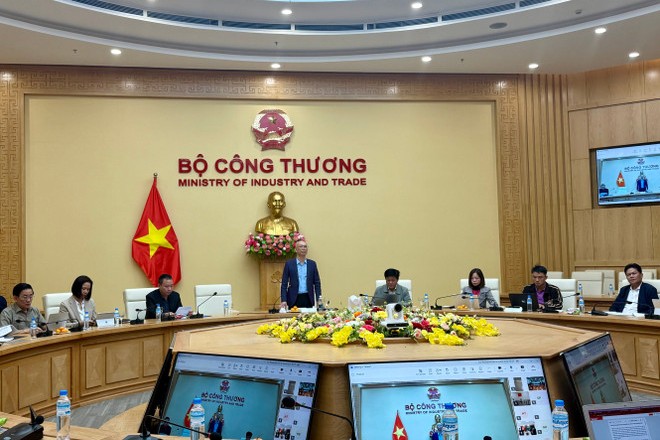
The Ministry of Industry and Trade has been assigned to lead this initiative, aiming to strengthen connectivity, ensure efficient goods movement, and expand Vietnam’s reach in global markets. The Ministry has been working with key logistics hubs such as Hai Phong, Quang Ninh, Thua Thien Hue, Da Nang, and plans to expand to Lao Cai, the Northwest, and southern regions.

According to Mr. Tran Thanh Hai, for Vietnam’s logistics sector to “take off,” several solutions are needed: developing synchronized and modern infrastructure; improving human resource training; promoting digital and green transformation; simplifying administrative procedures; investing in modern transport equipment; implementing smart customs; and providing financial and credit support for logistics enterprises.
He also emphasized that policies must align with the economic characteristics of each locality, with a focus on completing the legal framework to ensure effective governance of logistics activities.
Meanwhile, the Vietnam Logistics Business Association recommends standardizing logistics service pricing and developing unified fee systems. Additionally, establishing an electronic data exchange system among transport companies, warehouses, and customs authorities would significantly improve operational efficiency and reduce processing time.
Source: VietTimes